AJIO is one of India's fastest-growing fashion apps — 100M+ downloads, 4.4 stars, $1B+ in 2021 revenue. The product works. But the first 30 seconds of using it — the bit that decides whether a new user sticks around — is full of small, fixable misjudgements.
This is a screenshot-by-screenshot teardown of AJIO's onboarding flow, with the cognitive biases at play called out as they appear. Each section names what's broken and recommends what would be better.
Positioning in the market
- 100M+ downloads of the application
- 4.4-star rating on the Google Play Store with 2M+ reviews
- Revenue in 2021: $1B+ — ranked 146 in global e-commerce net sales
About
AJIO is the all-in-one apparel platform from Reliance Retail. From Reliance's own positioning:
"AJIO, a fashion and lifestyle brand, is Reliance Retail's digital commerce initiative and is the ultimate fashion destination for styles that are handpicked, on-trend and at prices that are the best you'll find anywhere."
Ideal Customer Profile
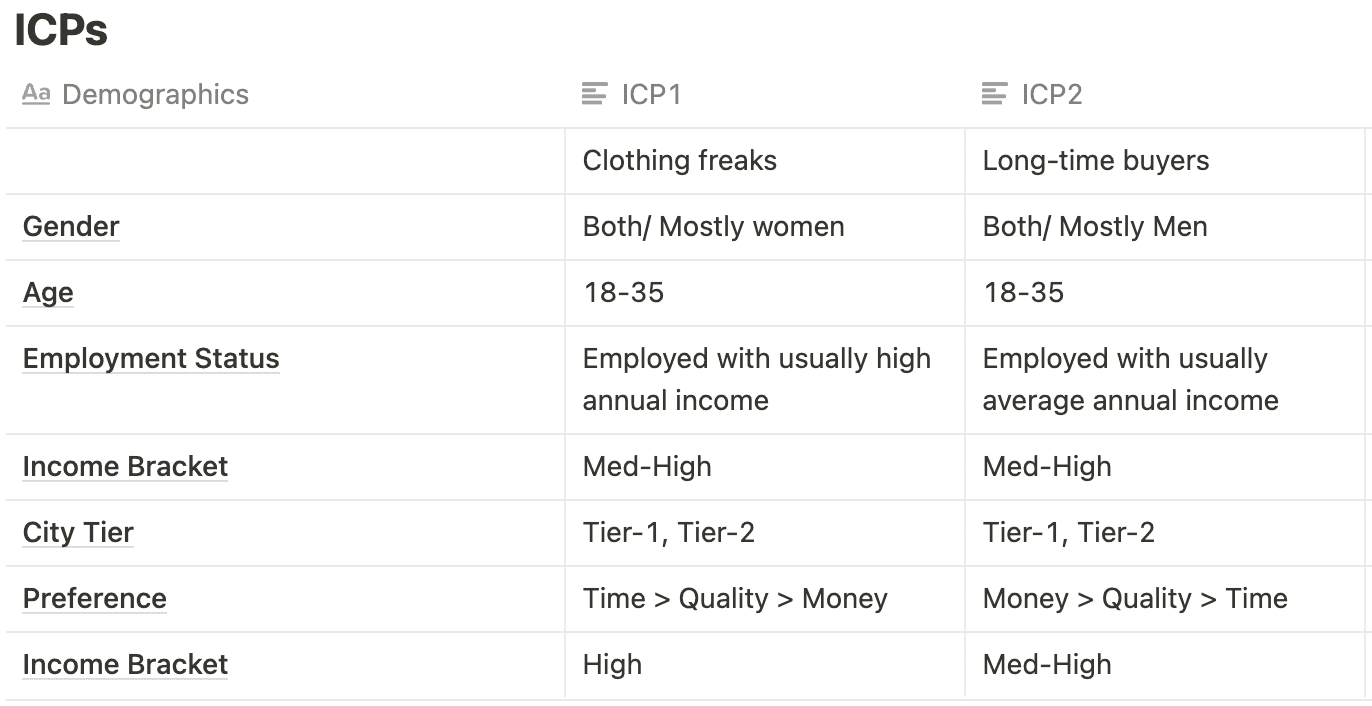
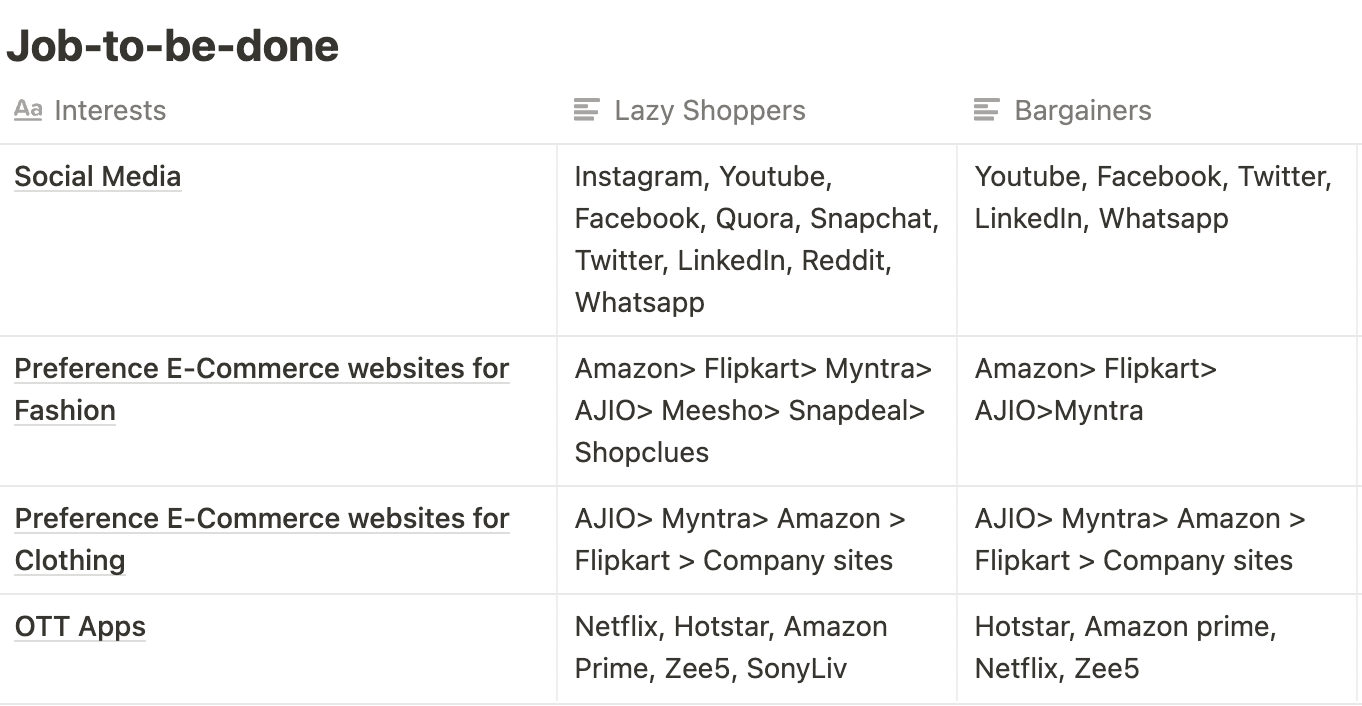
Onboarding teardown
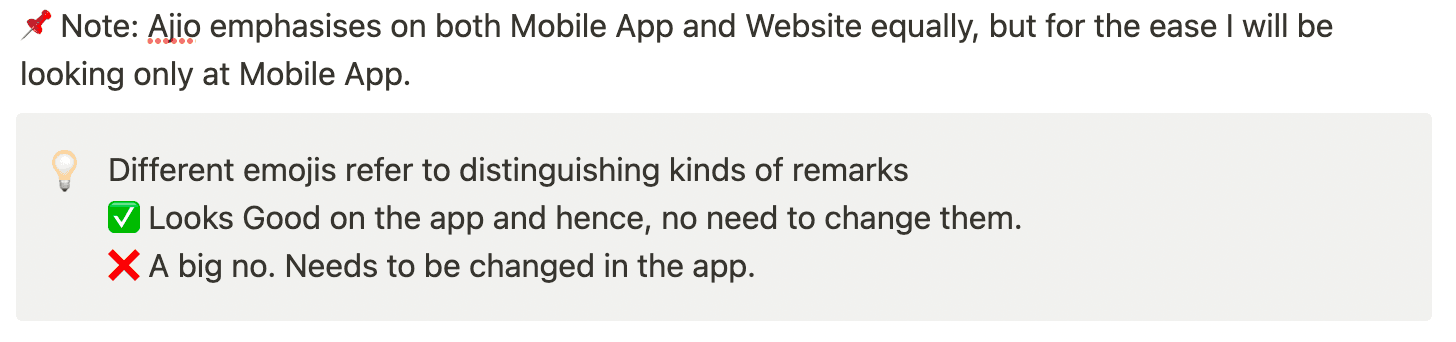
Discovery
Search
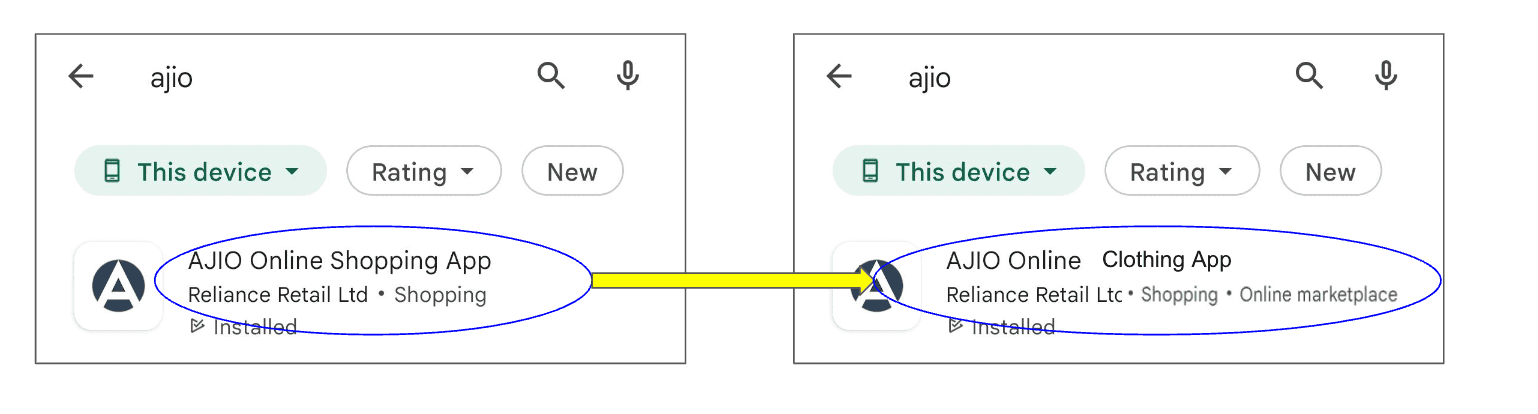
Problem. When searching for AJIO, the title shows "AJIO Online Shopping App."
Fix. It should show "AJIO Online Clothing App" — clearer purpose, better SEO. "Shopping" is generic; "clothing" is what AJIO actually is.
Play Store screen
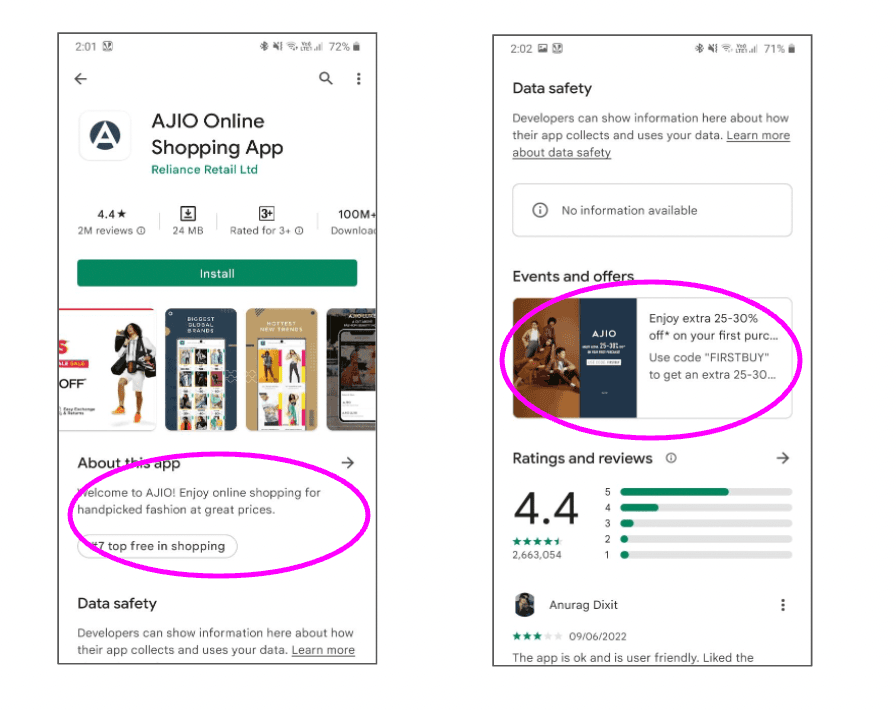
What works. The Play Store screen leans hard on discounts — building excitement before the user even downloads. Strong move.
Play Store assets
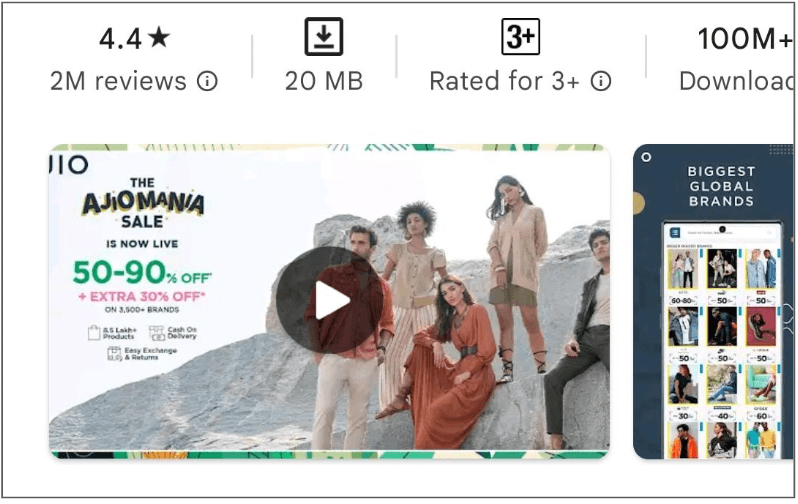
What works. Video assets are up to date, paired with the thumbnail of the latest sale.
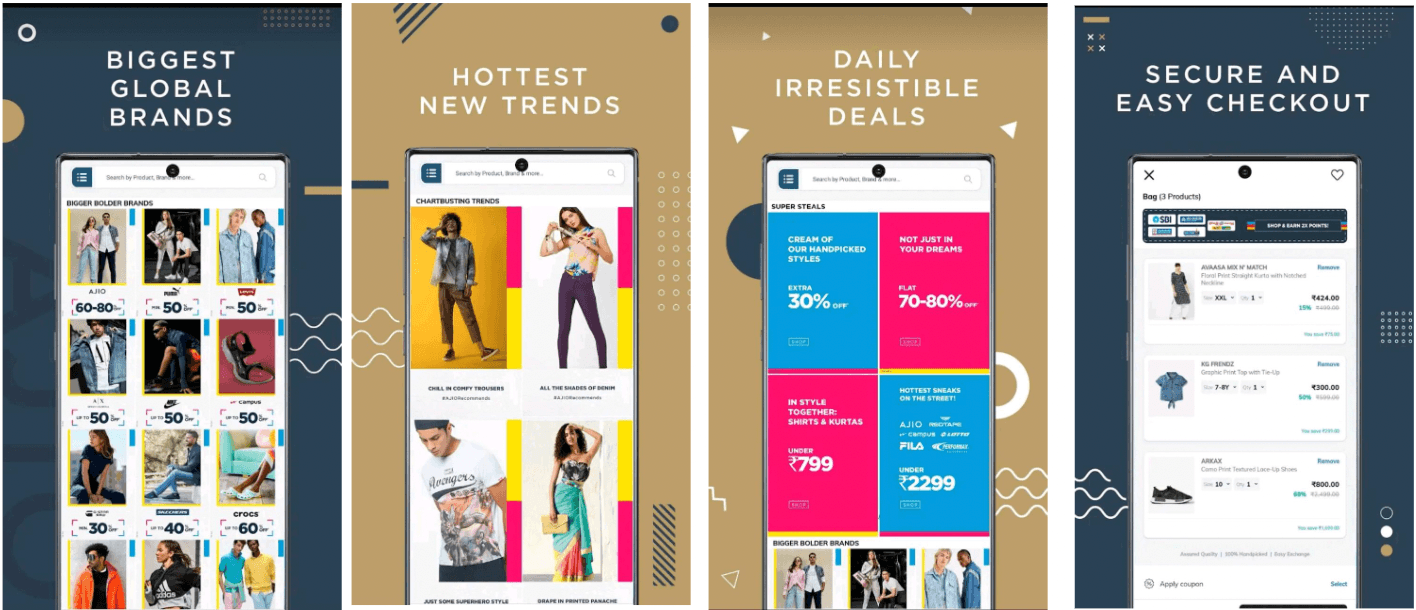
Problem. The other static assets are eye-catching but the small font sizes make brand names and discounts hard to read.
Fix. Static assets should use bigger fonts for brand names and discounts so they catch the eye instantly.
Play Store About section
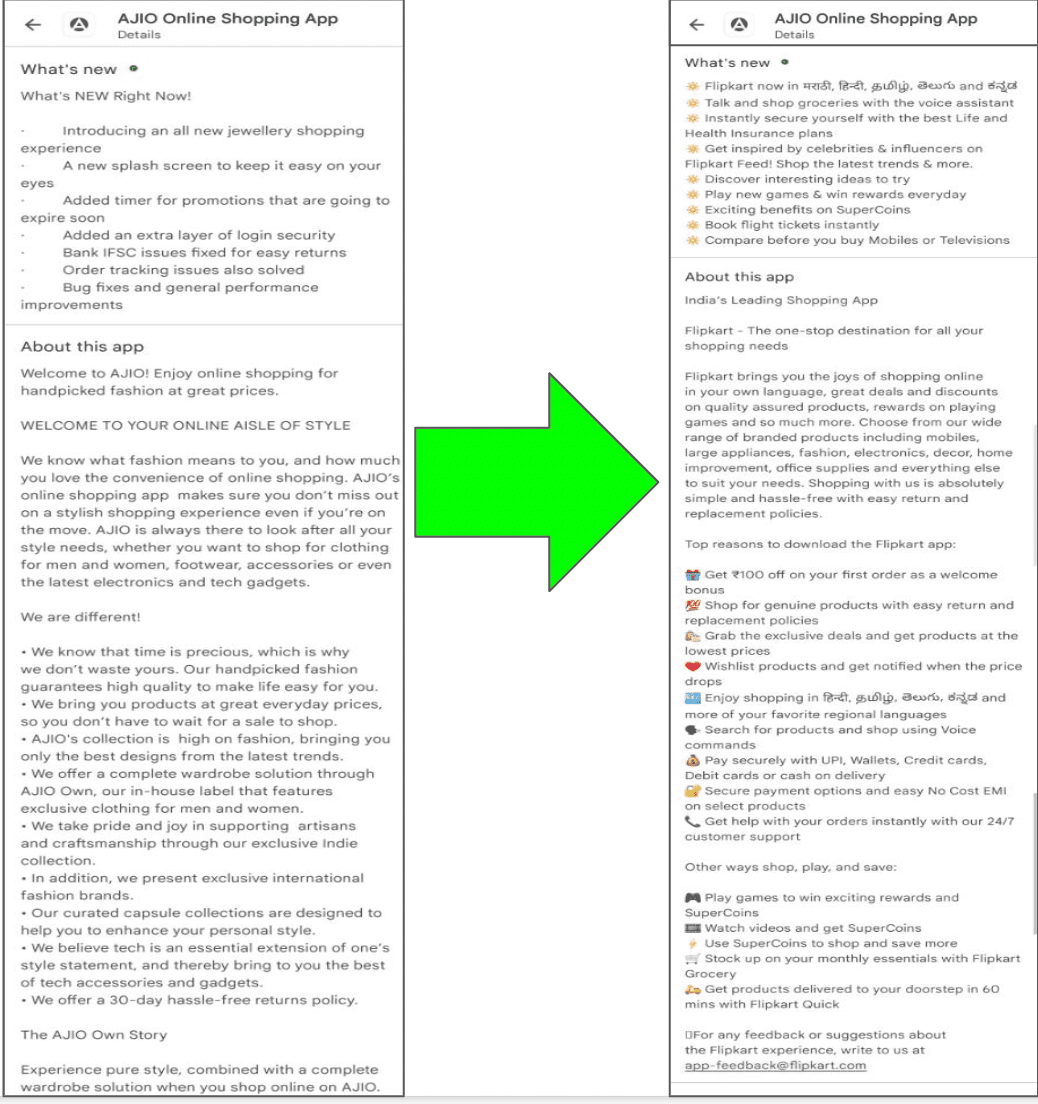
Problem. The About section is cluttered and unorganised — a never-ending wall of text. Users see the length and bounce before they ever read it.
Fix. Clear, crisp information about what's new and what the app does, with proper formatting. Excitement requires comprehension.
Post-installation
What works. Fresh install opens straight to the home screen — no forced login or signup. A real aha moment.
App homescreen — "please update"
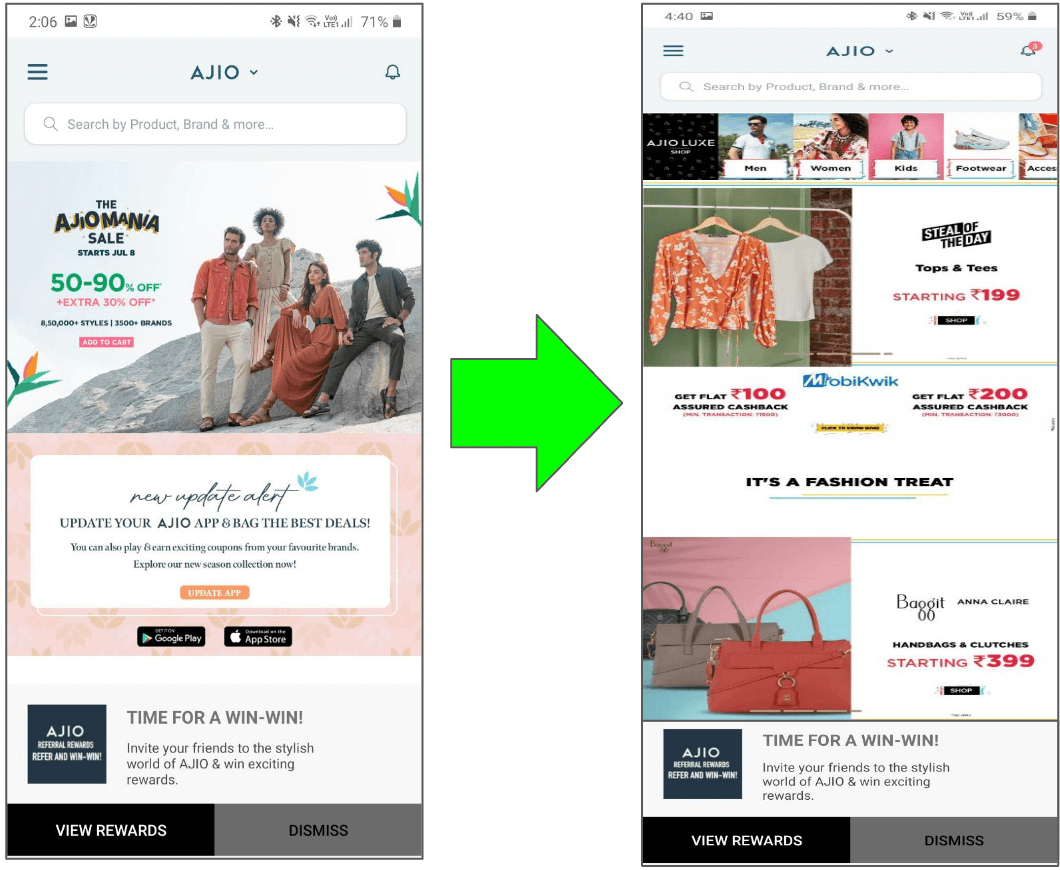
I just downloaded the app, and the first thing it asks me to do is update — to view discounts and "explore the new collection."
Problem. Instead of a positive first moment, the home screen gave me a negative one. Why does a user need to update an app immediately after downloading it?
Fix. Welcome the user the first time. Show them the features, the discounts, the value. Then ask for updates later, in a less aggressive way.
Problem. Asking me to refer a friend at the bottom after such a blunt onboarding. Why would I refer a friend to an app I just installed and haven't used yet?
Fix. Ask for referrals once the user has spent time in the app — or has surfed through a few sections and seen the value firsthand.
Permission screen, right after install
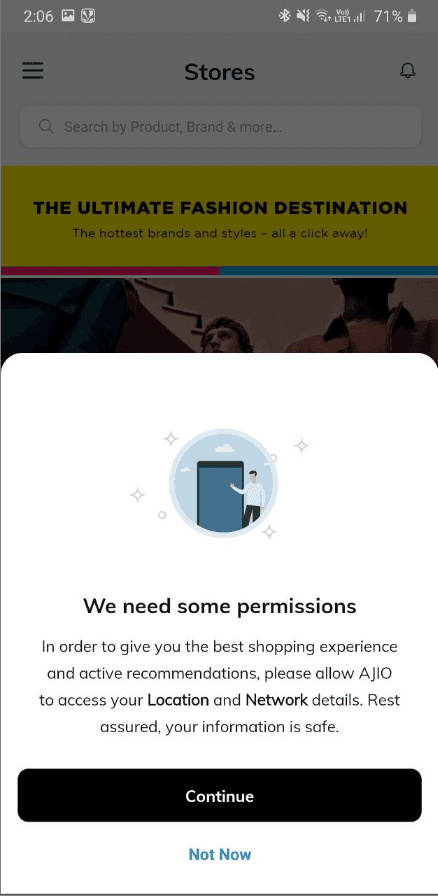
Problem. Asking for permissions right after landing on the home screen, before the user has logged in or done anything. How would these permissions even help me at this point?
Fix. Ask for permissions after the user has spent time exploring — or naturally, while creating an account, when context makes the ask obvious.
Unorganised homepage
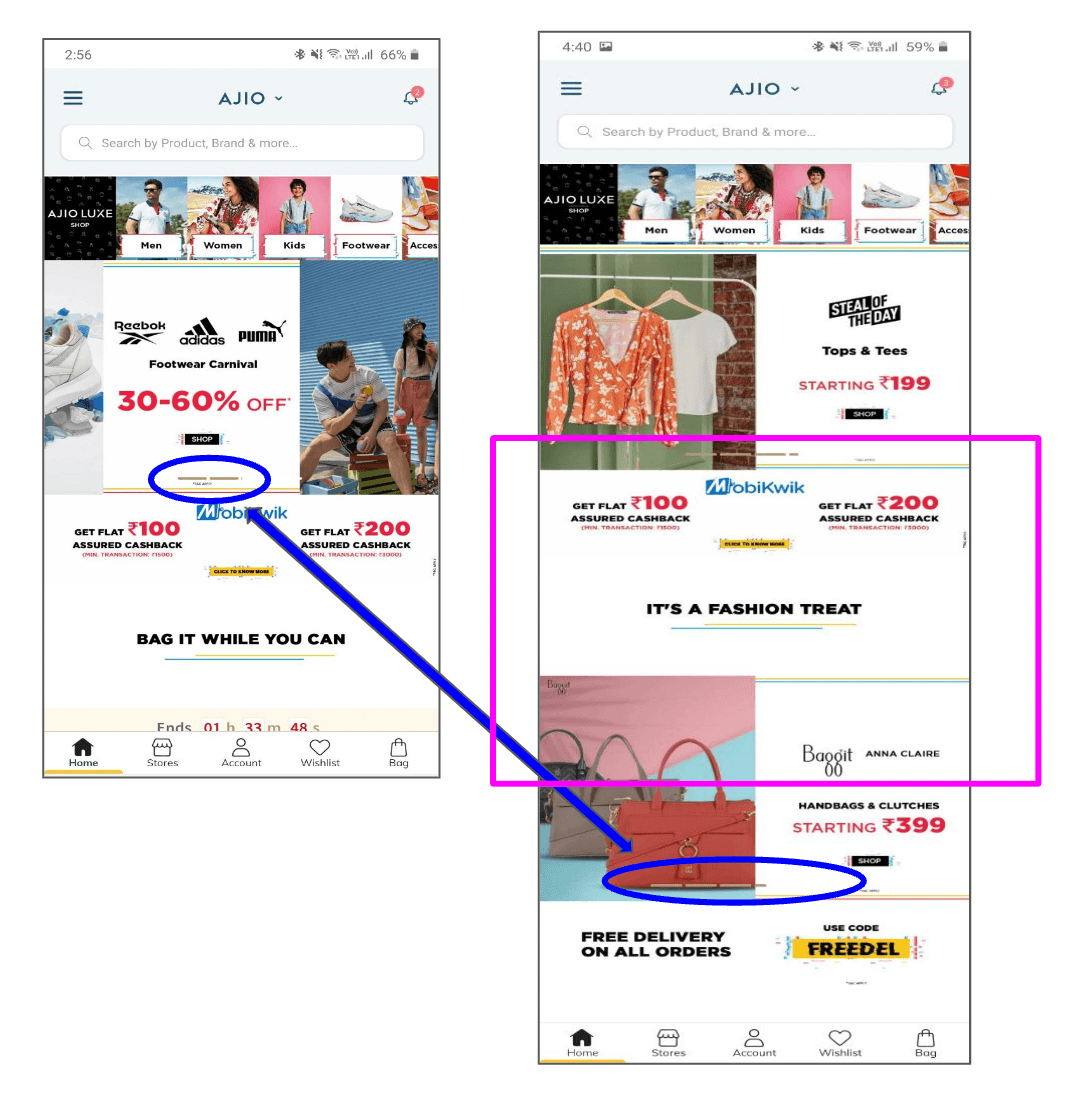
Scrolling through the homepage, the UX confuses more than it guides.
Problem. The carousel doesn't scroll cleanly — you can't even change slides with a swipe gesture. There's no clear separation between sections on the home page.
Fix. A carousel is a great way to fit more content if it's visible, predictable, and swipeable. Add clear separators between content blocks so users can differentiate categories at a glance.
Notifications
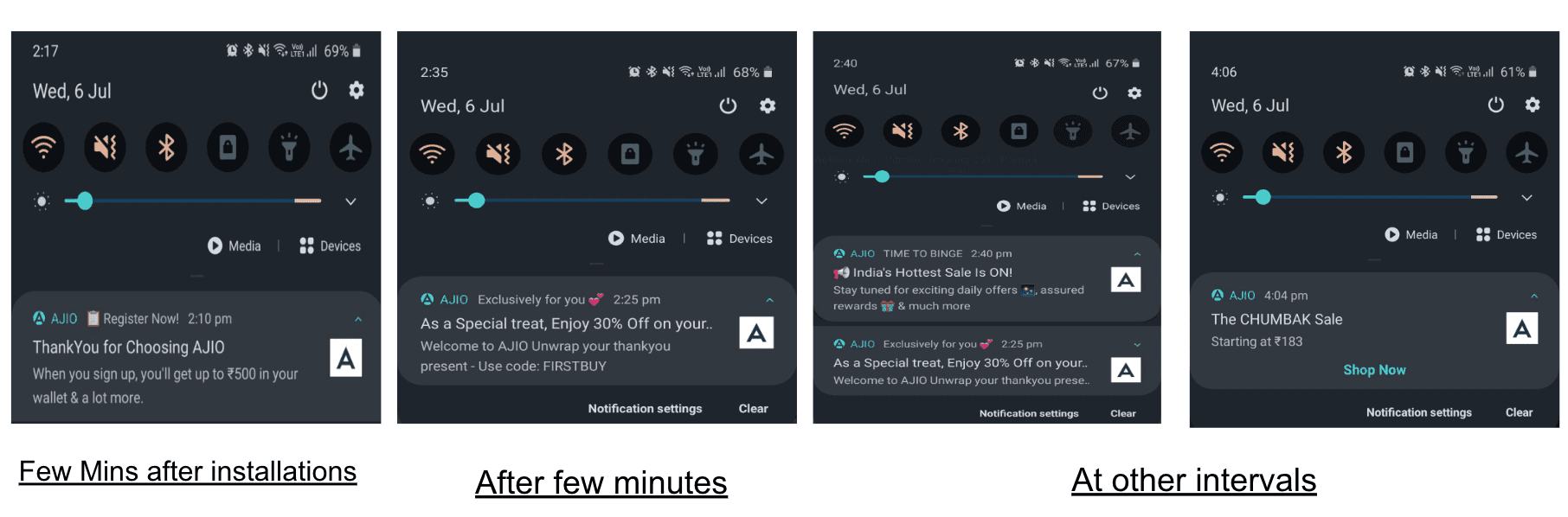
What works. Solid notifications — gentle nudges to sign up or log in, paired with the latest sale and offers.
Other section screens
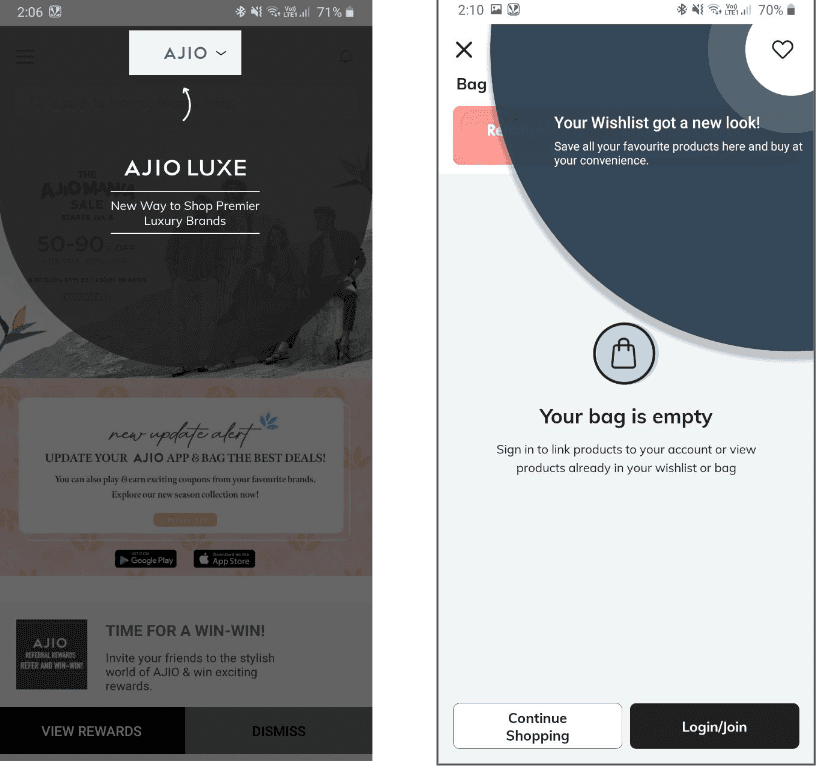
What works. When the user navigates to other sections, AJIO uses splash hints to teach the interface inline — a clean, contextual onboarding gesture.
Post sign-up
Signing in
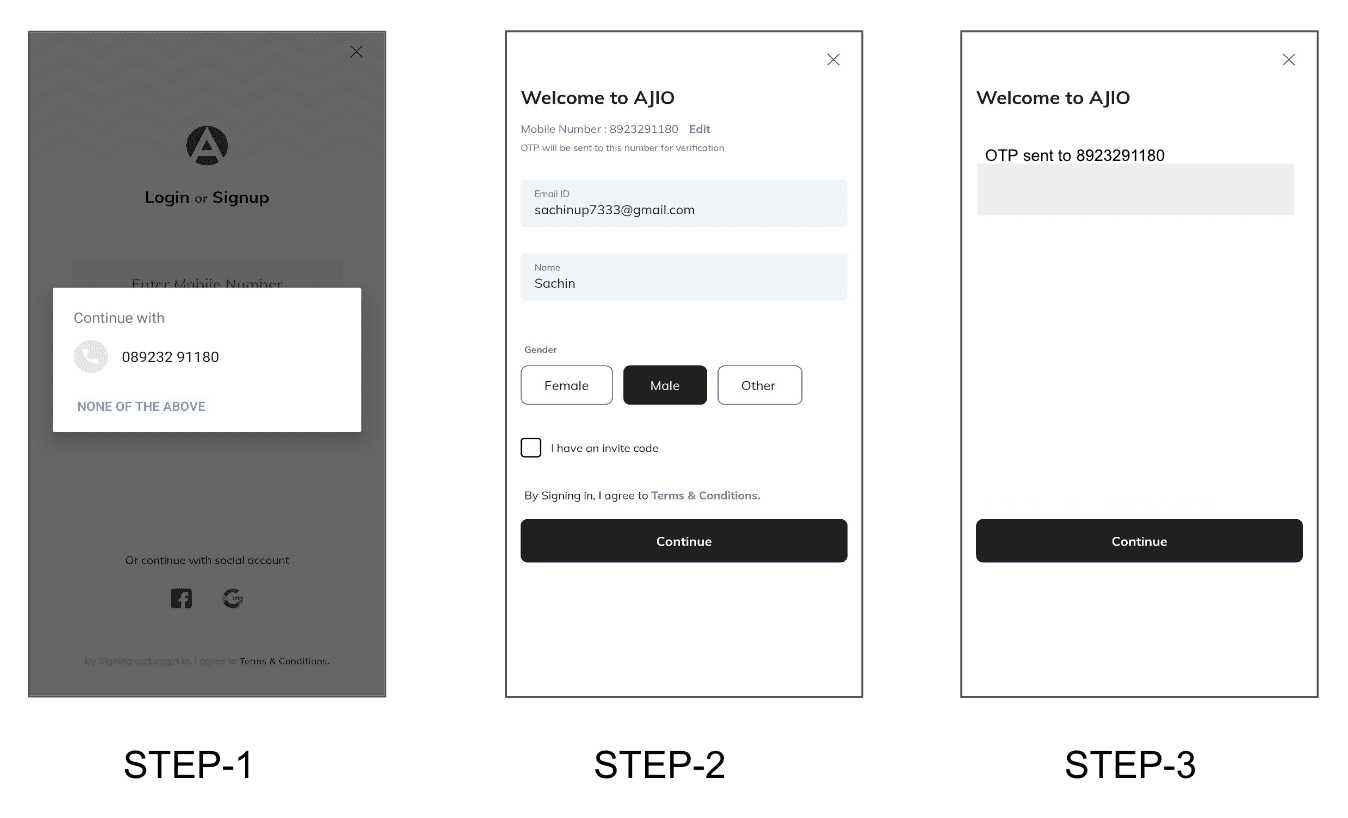
What works. Three-step sign-up — easy, hassle-free, fast.
What works. Wishlist functionality is gated behind sign-up, giving users a real reason to commit.
While ordering
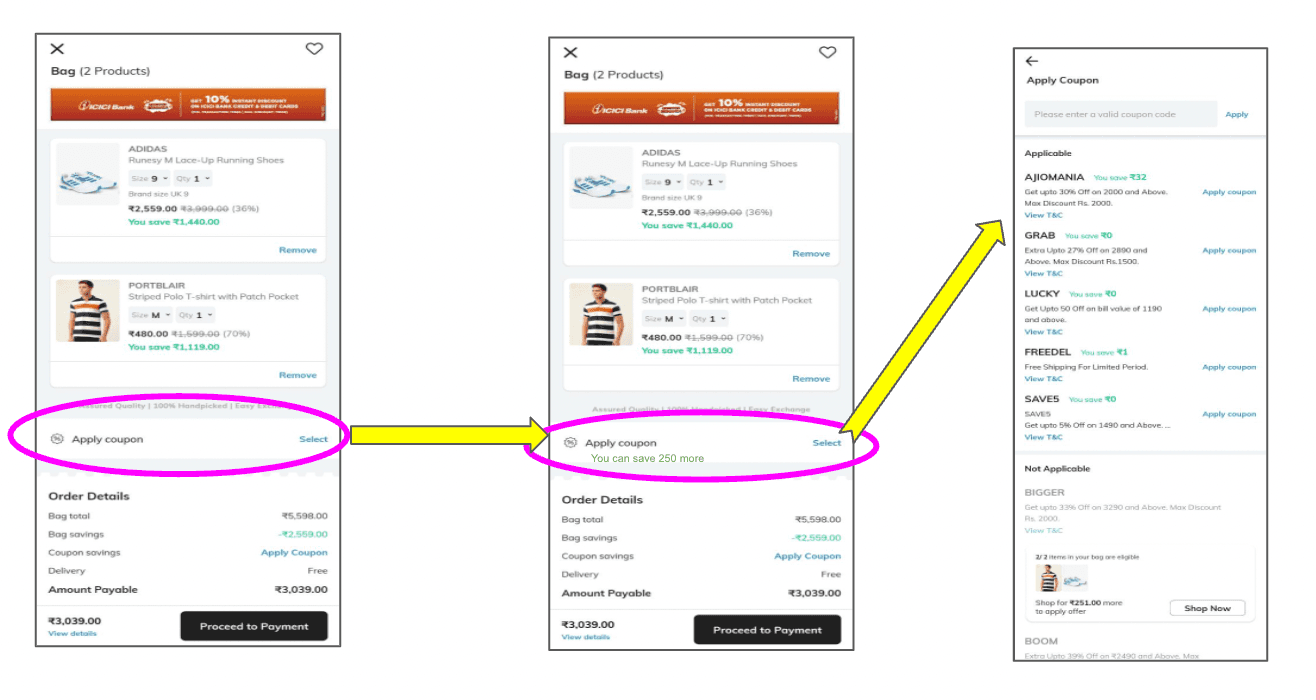
Problem. At the cart, no surfacing of available coupons or how much more the user could save by applying one.
Fix. Add a prompt like "You can save ₹250 more" — this turns coupon application from a hunt into a one-tap reward.
Order confirmation
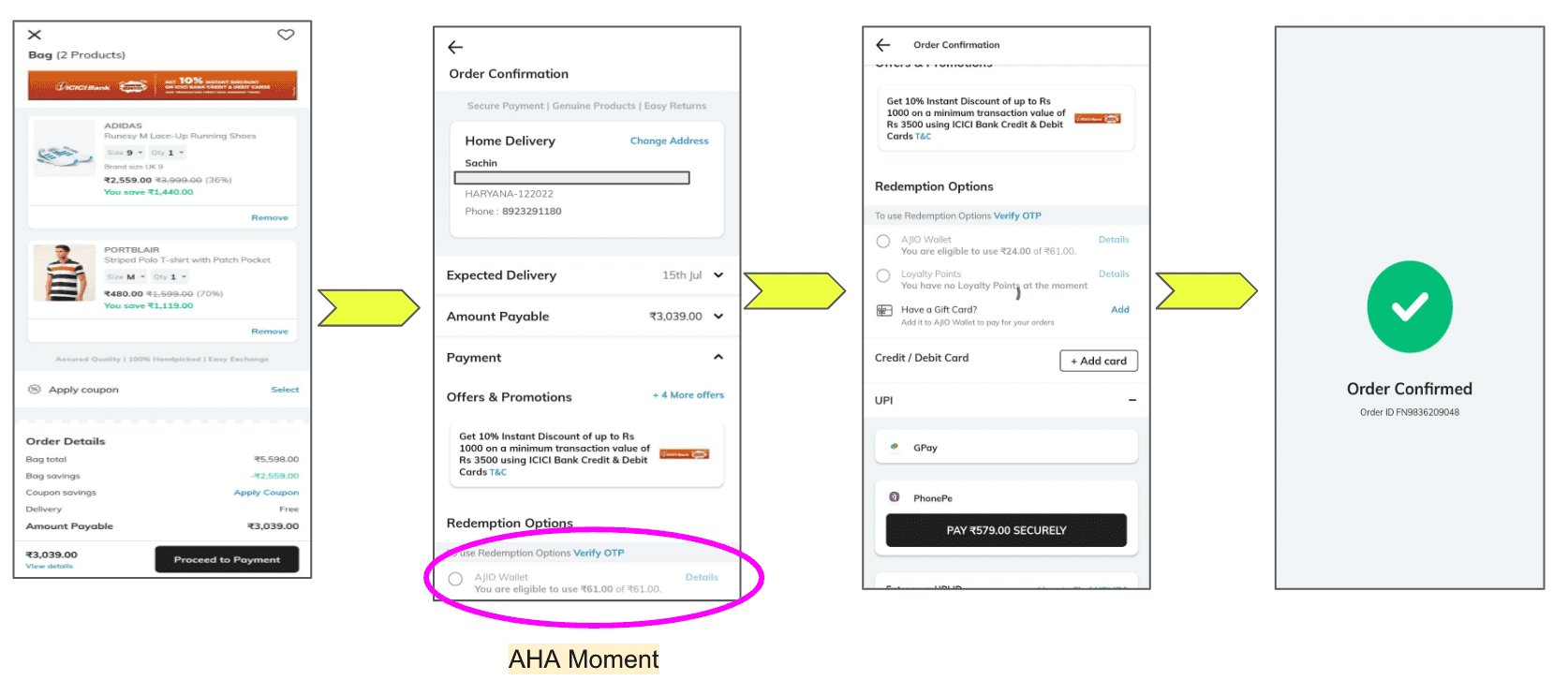
What works. Smooth process — pay via any of the many available options.
What works. During checkout I could use AJIO wallet rupees I'd earned from signing up. Another aha moment.
Post-order confirmation
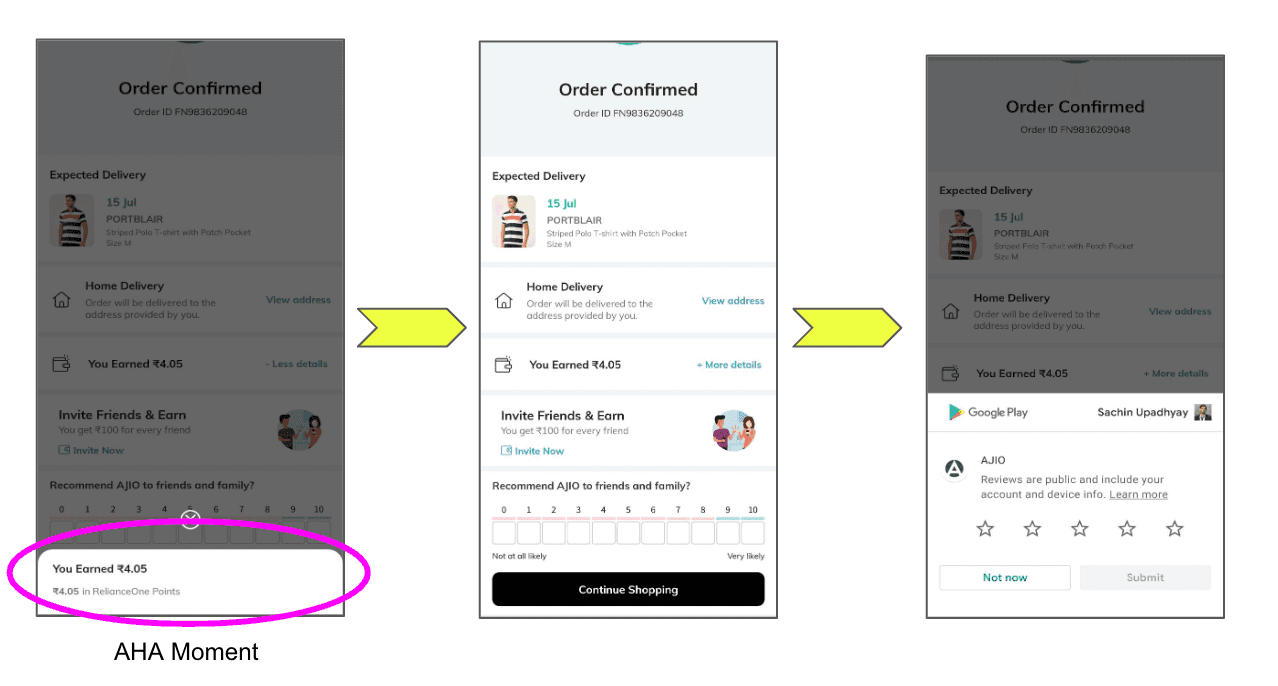
What works. After the order, AJIO tells me I've earned ₹4.05 in RelianceOne Points — usable across the Reliance ecosystem. Even though the amount is trivial, the framing is the aha moment.
What works. Asking for feedback or a friend recommendation right after confirmation — a good moment to capture how the user actually felt.
Problem. Immediately after the recommend rating, the app prompts me for a Play Store review. Too aggressive — feels like a second ask piled on the first.
Fix. The Play Store review prompt should appear when the user re-opens the app after the order arrives — that's when genuine, post-delivery feedback lives.
Metrics worth tracking
Qualitative
- Users signing up
- DAU / WAU
- Average time spent on app
- Number of times a user adds to cart per week
- Number of wishlisted items and their frequency
- Number of items at checkout
Quantitative
- Engagement (sessions, screen depth)
- App review on Play Store
- Recommend-to-a-friend rating
The point of this teardown. AJIO is already doing a lot right — wallet rewards, splash hints, lean sign-up. What's broken is mostly timing and asymmetric asks. Fix the moments where the app demands before it delivers, and the funnel tightens without changing a single feature.